
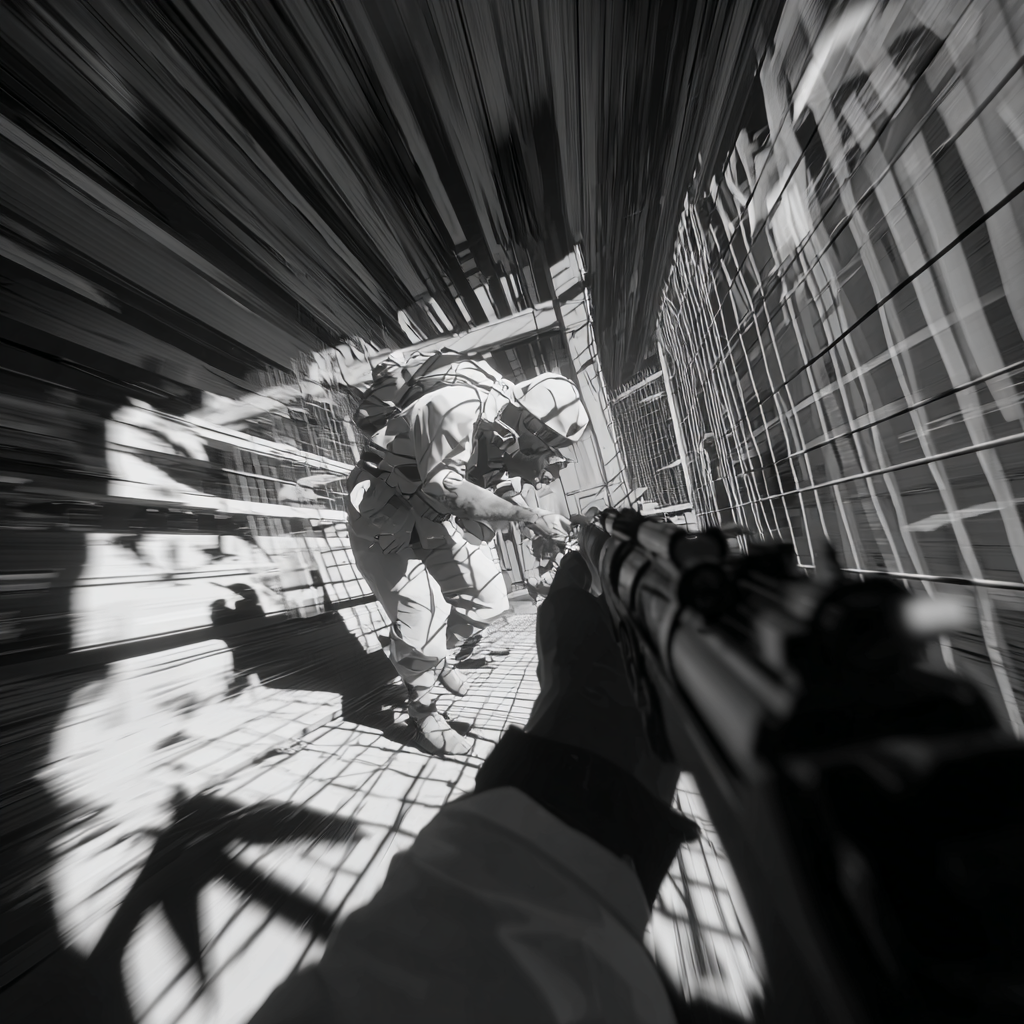
How Enemy Reaction Systems Change the Feel of Shooting in Modern Story-Driven Shooters?
Shooting in a modern story-driven shooter is not defined by weapons alone. Damage values matter. Recoil matters. Sound design matters too. Still, none of these elements can fully carry combat if enemies react in flat or repetitive ways. The player may fire a powerful rifle, hear a sharp report, and see visual impact effects, yet the encounter can still feel hollow. That usually happens when enemy response does not match the force, timing, and context of the shot.
Enemy reaction systems shape that missing layer.
These systems control what happens after a bullet lands or after danger is detected. They govern stagger, flinch, panic, suppression, evasive movement, vocal response, cover switching, group coordination, and last-second recovery. In practical terms, they decide whether combat feels stiff, readable, chaotic, tense, or satisfying. In story-driven shooters, this matters even more because combat is expected to support mood, pacing, and character fantasy rather than exist as a pure mechanical loop.
A shooter can have excellent art direction and strong writing. If enemies absorb bullets with little visible logic, the combat starts to feel disconnected from the world around it.
Enemy reactions turn hits into readable events
A gunfight feels better when the player can read what each shot actually did.
This is the first major role of reaction systems. When an enemy jerks backward after a close-range shotgun blast, stumbles after a leg hit, or drops behind cover after near-miss fire, the player receives immediate feedback. That feedback is not only visual. It is mechanical. It explains whether the target is weakened, interrupted, frightened, pinned down, or still fully active.
Without that layer, shooting becomes abstract. The player fires. The enemy loses hidden health. The model keeps moving almost normally. That kind of combat can still function, though it rarely feels vivid. It often feels as if bullets affect a number rather than a body in a space.
Modern story-driven shooters depend heavily on readable reactions because they usually aim for cinematic credibility. Even highly stylized games need this logic. The player must believe that fire exchanged in a corridor, ruined street, or office lobby has immediate consequences.
Reactions shape weapon identity better than raw stats do
Many shooters try to differentiate weapons through damage, rate of fire, reload speed, and spread pattern. Those factors matter, though they do not create full weapon identity on their own. Enemy response often finishes the job.
A light SMG may feel agile because enemies twitch, break formation, or retreat under sustained fire. A revolver may feel heavy because each hit causes a strong stagger window. A precision rifle may feel clinical because clean upper-body shots collapse enemy momentum at long range. In each case, the weapon fantasy depends on reaction rules as much as on ballistics.
This is why two games can feature similar gun categories and still feel completely different. In one game, enemies absorb repeated hits and continue advancing in almost scripted patterns. In another, even a brief exchange produces flinches, cover shifts, delayed peeks, and squad callouts. The second game usually feels more tactile, even if its underlying numbers are simpler.
Story-driven shooters benefit from this because the gunplay has to reinforce character perspective. A desperate civilian, trained operative, resistance fighter, or supernatural agent should not all produce the same enemy response profile.
Flinch and stagger systems control tempo
Enemy reaction systems also shape the rhythm of combat.
Flinch creates short interruption. Stagger creates a larger disruption. These states influence how quickly enemies can return fire, reposition, or pressure the player. A shooter with aggressive stagger windows feels different from one where enemies remain stable under almost every hit. The first often feels punchier and more reactive. The second can feel harsher, heavier, or deliberately oppressive.
Neither approach is automatically better. The effect depends on the tone of the game.
In a grounded military story, limited flinch may make trained enemies feel disciplined and dangerous. In a horror-action shooter, sudden stagger can create brief survival windows that keep the player moving. In a cinematic sci-fi campaign, different enemy classes may have different thresholds, which helps distinguish armored elites from unstable biological threats.
Tempo comes from these choices. Every reaction delay, recovery animation, and interruption window changes how long the player controls the flow of the fight.
Suppression makes missed shots matter
One of the most important advances in modern shooter design is the idea that missed shots can still affect enemy behavior.
Suppression systems make this possible. When rounds crack past an enemy’s head or slam into nearby cover, that enemy may duck, delay a peek, change route, or call for support. This gives the player a sense that firing into space still has tactical value. A burst does not need to land perfectly to matter. It can reshape the encounter anyway.
That changes the feeling of shooting in a major way.
Combat becomes less binary. The player is not limited to hit or miss as the only meaningful outcomes. Pressure itself becomes a tool. This is especially useful in story-driven shooters where encounters often aim to feel cinematic rather than purely competitive. Suppression helps create scenes where the player pushes enemies back, creates breathing room, or controls lines of movement under stress.
It also supports team fantasy. Companion AI, if present, feels more believable when enemies respond to crossfire and environmental pressure instead of acting as if only direct damage exists.
Group behavior makes firefights feel authored rather than random
A single enemy reaction can improve impact. Group reaction systems change the entire tone of combat.
Modern story-driven shooters often use squad logic so enemies react not only as individuals, though as members of a shared situation. One enemy flanks when another is pinned. One shouts that the player has moved left. One covers while another retreats. One rushes when the player reloads. These behaviors create the feeling that combat is unfolding inside a coordinated human response rather than inside isolated AI scripts.
This matters for shooting feel because the player starts reading the fight as a dynamic exchange. Every shot can trigger movement elsewhere. A wounded enemy may force a teammate to expose themselves. A grenade may scatter a formation. A suppressed rifle burst may collapse an angle long enough for the player to advance.
The best story-driven shooters often hide this complexity under simple perception. The player does not need to see the system. The player only needs to feel that enemies notice, adapt, and break under pressure in ways that make sense.
Good reactions balance realism with clarity
Absolute realism is not always the goal.
Real people do not always react in clear animation states. Real combat is messy, inconsistent, and often visually confusing. Games cannot follow that model too closely if they want readable encounters. Reaction systems work best when they translate danger into behavior that feels believable and legible at the same time.
This is a design balance. Too little reaction and the combat feels numb. Too much reaction and enemies become easy to manipulate or visually exaggerated. Constant staggering can turn dangerous opponents into puppets. Excessive panic can make every encounter look artificial.
The strongest systems usually apply reaction selectively. Enemy type matters. Weapon type matters. Distance matters. Cover state matters. Narrative context matters too. A frightened civilian militia should not react like a special forces unit. A desperate cultist should not hold ground like a trained robot guard.
These distinctions are what give shooting its texture.
Shooting feels better when enemies seem to value survival
The deepest effect of reaction systems is psychological.
Combat becomes more convincing when enemies appear to care about staying alive. They hesitate. They retreat. They crawl toward cover. They abandon bad angles. They panic when isolated. They become reckless when cornered. The player reads these signals instantly, even without thinking in systems language.
That is what changes the feel of shooting in modern story-driven shooters.
Bullets stop feeling like simple damage delivery. They start feeling like force applied to a living situation. The result is better tension, better pacing, and better combat memory. Players may forget exact damage numbers. They usually remember the enemy who stumbled through a doorway, the squad that broke under pressure, or the gunfight that felt dangerous because every shot changed the room.